
Spring Vegetable Stir-Fry
with Garlic and Ginger
(Chūn Jì Shí Shū Cōng Jiāng Chǎo 春季时蔬葱姜炒)
As the climate warms and daylight lengthens, spring cooking emphasizes freshness, color, and quick preparation. A simple vegetable stir-fry with garlic and ginger is one of the most common ways Chinese home kitchens respond to the season. Rather than heavy sauces or long braising, this dish relies on high heat, short cooking time, and the natural flavors of young vegetables just coming into their own.
From a traditional Chinese medicine perspective, spring corresponds with the Liver system and the free movement of Qi. Tender green vegetables are especially favored at this time of year, as they help ease stagnation and support the body’s natural urge to stretch, move, and expand after winter. Garlic (suàn 蒜) and fresh ginger (jiāng 姜) are lightly warming and aromatic, aiding digestion and preventing the dish from becoming too cooling, which is important during early spring when temperatures may still fluctuate.
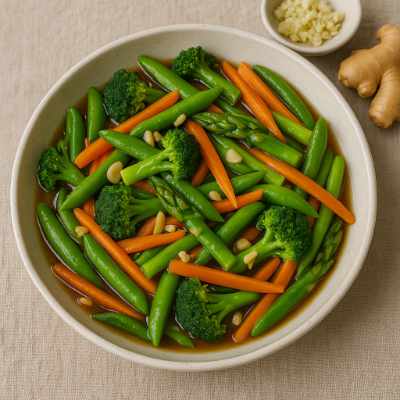 This stir-fry is intentionally flexible. The vegetables listed below can be adjusted according to availability, making it an ideal seasonal staple rather than a fixed recipe.
Ingredients (serves 2–3)
- 1 cup baby bok choy, chopped
- 1 cup snow peas or sugar snap peas
- 1 cup asparagus, cut into bite-size pieces
- 2–3 scallions, sliced on the bias
- 2 cloves garlic, thinly sliced
- 1 teaspoon fresh ginger, finely sliced or grated
- 1–2 tablespoons neutral oil (such as peanut or avocado oil)
- Salt, to taste
- A small splash of light soy sauce (optional)
Preparation:
Wash and prepare all vegetables in advance, keeping leafy greens separate from firmer vegetables. Heat a wok or wide skillet over medium-high heat until hot. Add the oil, then quickly add the garlic and ginger, stirring just until fragrant—about 10–15 seconds. Do not allow them to brown.
Add the firmer vegetables first, such as asparagus and snow peas, and stir-fry for 1–2 minutes. Add the baby bok choy and scallions and continue cooking, tossing frequently, until the greens are just wilted and bright in color. Season lightly with salt and, if desired, a small splash of soy sauce. Remove from heat immediately.
Serving suggestion:
Serve hot as a side dish with rice or alongside other light spring dishes. It also works well as a topping for barley or millet, or as a simple meal with tofu.
Seasonal note:
Quickly cooked green vegetables help maintain clarity and lightness during spring, supporting smooth energy flow without taxing digestion. This dish exemplifies the seasonal principle of eating foods that are fresh, simple, and minimally processed as the body transitions out of winter.