
Mung Bean and Spring Onion Pancakes
(Chūn Jié Lǜ Dòu Cōng Bǐng 春季绿豆葱饼)
As winter recedes and spring begins to unfold, traditional Chinese cooking turns toward foods that are light, gently cleansing, and supportive of renewal. Mung bean and spring onion pancakes are a simple seasonal dish that reflects this transition well. They are warming enough for cool spring mornings yet light enough to encourage the smooth circulation of qi associated with the Liver system, which is emphasized in spring according to traditional Chinese medicine.
 Mung beans (lǜdòu 绿豆) have long been valued in Chinese dietary therapy for their ability to clear mild heat, support digestion, and assist the body during periods of seasonal change. In early spring, when lingering heaviness from winter foods can remain, mung beans offer a gentle way to refresh without being overly cooling. Spring onions (cōng 葱), one of the first vegetables to emerge after winter, are lightly warming and aromatic, helping to move qi and awaken the appetite.
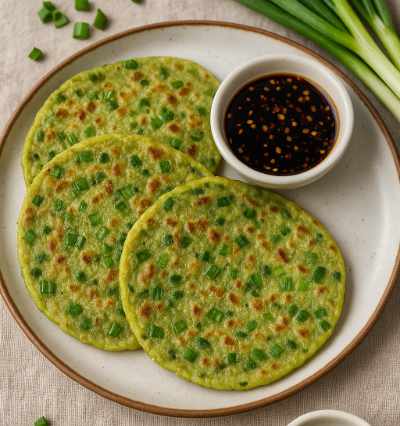
These pancakes are traditionally thin, lightly crisp on the outside, and tender within. They can be enjoyed on their own, as part of a larger meal, or alongside simple vegetables and tea.
Ingredients (serves 2–3)
- 1 cup dried mung beans
- 2–3 spring onions (scallions), finely chopped
- ½ teaspoon fresh ginger, finely grated (optional)
- ½ teaspoon salt
- Water, as needed
- Neutral oil (avocado or peanut) for pan-frying
Preparation:
Soak the mung beans in water for at least 4 hours or overnight. Drain and rinse thoroughly. Place the soaked beans in a blender with enough fresh water to create a pourable batter, similar in consistency to thin pancake batter. Blend until smooth.
Transfer the batter to a bowl and stir in the chopped spring onions, salt, and ginger if using. Allow the mixture to rest for 10–15 minutes; this improves texture and flavor.
Heat a lightly oiled skillet over medium heat. Pour a small ladle of batter into the pan and tilt to spread it thinly. Cook for 2–3 minutes until the underside is lightly golden, then flip and cook the second side for another 1–2 minutes. Repeat until all batter is used.
Serving suggestion:
Serve warm with a simple dipping sauce of light soy sauce and rice vinegar, or enjoy plain to appreciate the natural flavor of the mung beans and onions.
Seasonal note:
This dish is especially appropriate in spring when the body benefits from foods that support gentle cleansing and upward, expansive energy. It pairs well with lightly steamed greens or a simple soup, making it suitable for both breakfast and lunch during the seasonal shift.