
Mung Bean Cooling Drink
(Lǜdòu Tāng 绿豆汤)
In Chinese kitchens, mung beans have long been associated with relief during hot weather. Rather than being treated as a sweet beverage, mung bean soup was traditionally prepared as a light, drinkable food, consumed slowly to cool and settle the body. It was common in summer months, after physical work, or during periods of heat, and was valued for its simplicity as much as its effect.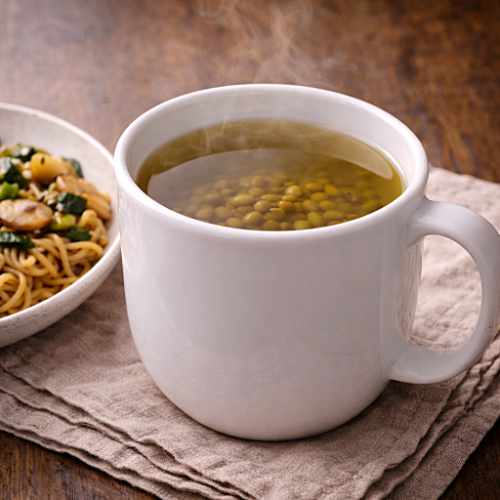
Unlike modern cold drinks, this preparation was rarely iced. Cooling was achieved through ingredient choice and gentle cooking, not temperature extremes. Sweetness, if added at all, was kept subtle, allowing the clean flavor of the beans to remain the focus.
This version stays close to everyday home practice and can be served warm or at room temperature.
Ingredients: Serves 4
- ½ cup dried mung beans
- 5–6 cups water
- Optional sweetener: rock sugar, honey, or allulose, to taste
Method:
Rinse the mung beans thoroughly and soak for at least 4 hours or overnight. Drain and rinse again.
Place the beans and water in a pot and bring to a boil. Reduce to a gentle simmer and cook uncovered for 30–40 minutes, until the beans split and soften but do not completely dissolve.
Skim any foam that rises to the surface. Taste and add a small amount of sweetener only if desired. The finished soup should be light, clear, and refreshing rather than thick or sweet.
Allow to cool slightly before serving, or refrigerate briefly and bring back toward room temperature.
Notes on Use and Variation:
This drink is traditionally served with the beans left in the liquid, though it may be lightly strained if a clearer drink is preferred. Cooking time affects texture: shorter cooking yields a lighter broth, while longer cooking produces a thicker, more spoonable soup.