

Barley Water
(Dàm Mài Shuǐ 淡麦水)
Barley water has a long history as a simple summer drink in Chinese households, particularly in times when refrigeration and commercial beverages did not exist. It was valued not for sweetness or flavor intensity, but for its lightness and ability to refresh without taxing the body. In many homes, it was prepared almost automatically during warmer months, much like a pot of tea.
Unlike modern grain drinks, barley water is not thick or porridge-like. It is closer to a lightly infused liquid, where the grain contributes softness and clarity rather than substance. Any sweetness, if added at all, was minimal.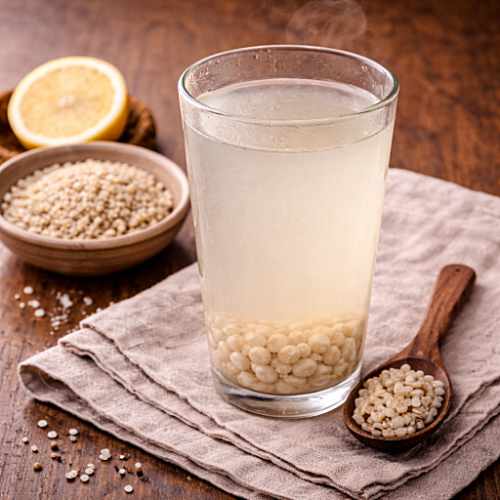
This preparation illustrates an important idea in traditional Chinese food culture: cooling does not require cold temperatures or strong flavors. Sometimes it is simply the absence of heaviness.
Ingredients: Serves 4
- ½ cup pearled barley
- 6–7 cups water
- Optional: a small strip of lemon peel or a few drops of lemon juice
- Optional sweetener: honey or allulose, to taste
Method:
Rinse the barley thoroughly under running water.
Combine the barley and water in a pot and bring to a boil. Reduce to a gentle simmer and cook uncovered for 30–40 minutes, until the liquid turns lightly cloudy and the barley is fully softened.
Strain the liquid into a pitcher or bowl, reserving the cooked barley for another use if desired. Add lemon peel or a few drops of lemon juice only if using, keeping the flavor subtle.
Sweeten very lightly, if at all. Allow to cool slightly before serving, or serve at room temperature.
Notes on Use and Variation:
Barley water is meant to be mild. If it tastes like lemonade or sweet tea, it has gone too far from its original purpose. Lemon should be a background note, not a defining flavor.
Note: The cooked barley can be reused in soups or salads, reflecting traditional frugality.