


Mental Balance
Finding stillness in a world that never stops moving
Balance is not something the body finds on its own. It begins in the mind... in the quality of attention we bring to each moment, each step, each breath.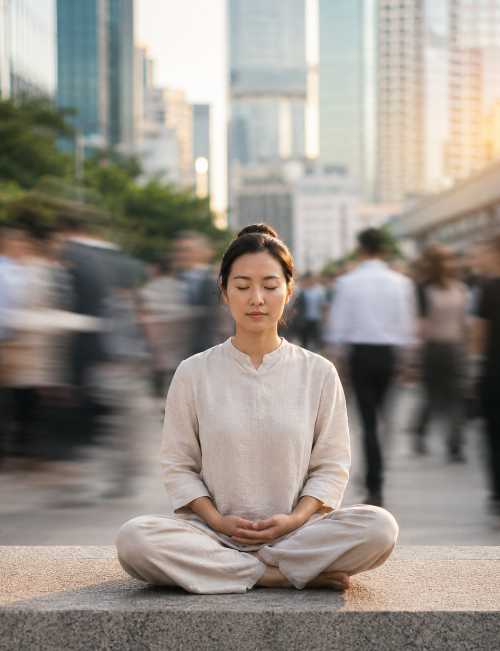
We live in an era of relentless noise. Notifications arrive before we've finished our morning coffee. Our attention is pulled in a dozen directions before noon. And quietly, beneath the surface, something essential begins to slip — our sense of center. Not just physical steadiness, but the deeper equilibrium that allows us to move through life with purpose and ease.
Mental balance is not the absence of stress. It is the capacity to remain grounded when stress arrives. It is the cultivated ability to feel where you are, to know what you need, and to return to yourself when the world tries to pull you away. Taijiquan (T'ai Chi), the ancient Chinese practice of slow, flowing movement, offers one of the most profound teachings on this subject: when the mind is calm, the body naturally follows.
The Inner Root
"A fall is often just the outward sign of an imbalance that started inside."
In Taijiquan, every movement begins from what practitioners call the root, which is a felt sense of connection to the ground, to gravity, to the present moment. Students spend months simply learning to stand, to breathe, to notice. Not because standing is complicated, but because genuine presence is rarer than we think.
This principle extends far beyond the practice floor. When our minds are scattered... racing between regret and anticipation, distracted by devices, numbed by overwhelming news, we lose our inner root. Decisions become reactive. Relationships feel strained. The body holds tension it cannot release. We become, in the truest sense, unbalanced.
Reclaiming Your Center
Mental balance can be cultivated deliberately, in simple and consistent ways. Mindful movement, breathing practices, and intentional stillness are not luxuries—they are maintenance. Just as we service a car or tend a garden, the mind requires regular attention to remain resilient.
Begin small. A few minutes of slow, deliberate walking each morning without headphones, without urgency. Notice how your weight shifts from heel to toe. Feel the ground receiving you. Let the breath set its own rhythm. This is not wasted time. This is the practice of returning to yourself.
Over time, these moments of recollection build something durable: a quiet internal compass that stays oriented even when circumstances grow difficult. You begin to recognize the early signals of imbalance... a tightening in the chest, a shortening of breath, a mind that cannot settle, and you develop the tools to respond rather than react.
Balance, in the end, is not a destination. It is a practice, renewed each day, in each ordinary moment. When you are rooted within, everything that tries to pull you off course begins to lose its hold. That steadiness (calm, connected, whole) is available to anyone willing to slow down long enough to find it.