
Taiji Booms Among Youth in China:
Over 78 Million Now Practice the Ancient Art
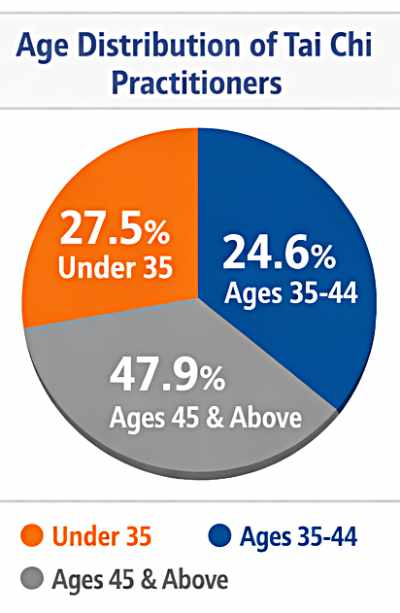
In a striking testament to the enduring appeal of traditional Chinese culture, a 2025 survey by China's National Sports Administration reports that an estimated 78.58 million people—approximately 5.58% of the national population—are practicing Taijiquan (T'ai Chi).
Long seen as the domain of retirees in city parks, Taijiquan is experiencing a demographic shift. While it continues to attract older practitioners, the sport is increasingly popular with younger Chinese: 27.5% of practitioners are under the age of 35, and another 24.6% fall within the 35–44 age bracket.
This surge among younger generations reflects a broader interest in health, mindfulness, and cultural heritage.
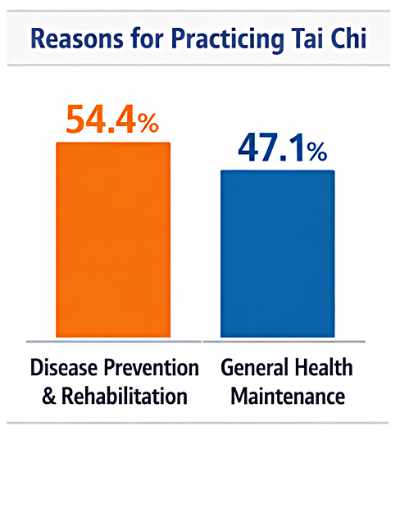 Why Are People Practicing?
The motivation behind this trend is overwhelmingly health-driven. Among respondents, 54.38% cited disease prevention and rehabilitation as a primary reason for practicing, while 47.13% emphasized general health maintenance. This aligns with Taijiquan's long-standing reputation for improving balance, reducing stress, and promoting internal energy (Qi) flow.
How Are They Practicing?
The 24-Step Simplified Tai Chi form, introduced in 1956 to standardize teaching, remains the most widely practiced style, with 61.8% of respondents indicating it as their form of choice. Nearly 41.2% of all practitioners report practicing daily, showing high levels of engagement and dedication.
Public Spaces as Cultural Hubs
While the study did not provide new data on the number of practitioners of Qigong, a closely related internal art, it noted that public parks remain vital spaces for all forms of internal martial arts practice—underscoring their role as grassroots wellness hubs.
Global Reach
Beyond China's borders, Taijiquan has also made a global impact. A 2017 statement from the mayor of Jiaozuo, often recognized as the birthplace of Taijiquan, estimated that 300 million people practice the art worldwide. A 2020 academic estimate from Peking University placed the number closer to 100 million globally.
Original article (in Chinese only): https://www.sport.gov.cn