Sweet Millet and Squash Porridge
(Xiǎomǐ Zhōu 小米粥)
Millet was one of the earliest cultivated grains in China and remained a household staple for centuries, particularly in northern regions where wheat and rice were less reliable. Long before refined flours became common, millet porridges were eaten daily, valued for their warmth, simplicity, and gentle sweetness when cooked slowly.
In traditional home cooking, vegetables such as squash or sweet potato were often added not to create a dessert, but to bring natural sweetness and body to an otherwise plain grain. The result was a dish that could serve as a light meal, an evening snack, or a softly sweet conclusion to dinner without relying on sugar.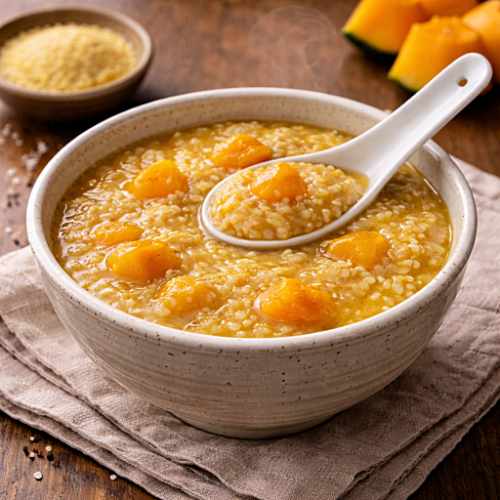
This porridge reflects that approach. It is modest, adaptable, and deeply rooted in everyday life.
Ingredients: Serves 4
- ½ cup hulled millet
- 1 cup diced squash or sweet potato/yam
- 4–5 cups water
- Optional: 2–3 dried dates, chopped
- Optional sweeteners: honey or allulose (a healthy sugar substitute), to taste
Method:
Rinse the millet thoroughly under warm running water, rubbing gently to remove any surface bitterness.
Combine the millet, squash or sweet potato, and water in a pot. Bring to a boil, then reduce to a low simmer.
Cook uncovered for 25–30 minutes, stirring occasionally, until the millet has broken down and the vegetables are soft, thickening the porridge naturally. Add dates during the last 10 minutes of cooking if using.
Taste and add a small amount of sweetener only if needed. The finished porridge should be softly sweet from the grain and vegetables, not dessert-like.
Serve warm.
Notes on Use and Variation:
This porridge thickens as it cools and can be loosened with hot water if needed. Sweet potato or yam works equally well and is often more readily available than winter squash, making it a practical and historically appropriate substitution.