
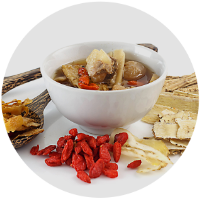


Sweet Fermented Rice
(Jiǔniàng 酒酿 / Lāo Zāo 醪糟)
Sweet fermented rice occupies a quiet but important place in Chinese food culture. It is neither fully alcoholic nor simply sweet, and it has long been prepared at home rather than purchased. Historically, it was valued for its gentle warmth, aroma, and digestibility, and it often appeared in small bowls rather than as a plated dessert.
Unlike strong ferments meant for long storage, jiǔniàng is a short, living fermentation. Steamed rice is inoculated with a starter and allowed to rest just long enough for the starches to begin transforming into sugars. The result is softly sweet, slightly fragrant, and faintly effervescent, with grains suspended in a light, milky liquid.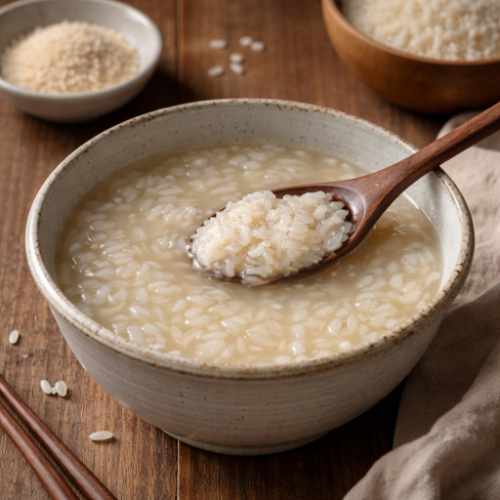
Traditionally, sweet fermented rice was eaten on its own, spooned warm into bowls, or used as a base for other simple dishes. It reflects a broader principle in Chinese kitchens: fermentation does not need to be intense or sour to be meaningful.
Ingredients: Makes about 2½–3 cups
- 2 cups cooked short-grain rice, cooled to warm
Starter (choose one): - 1 teaspoon powdered Chinese rice wine yeast (jiǔqū)
- or 2 tablespoons rice koji
- ¼ cup non-chlorinated water, if needed
Method:
Cook the rice until tender but not mushy. Allow it to cool until warm to the touch; it should not be hot.
Place the rice in a clean bowl and sprinkle the yeast evenly over the grains. Mix gently with clean hands or a spoon, breaking up clumps so the yeast is distributed throughout.
Pack the rice lightly into a clean glass jar or ceramic container, pressing gently to remove air pockets but not compacting it tightly. Create a shallow well in the center and, if the rice seems dry, add a small amount of non-chlorinated water.
Cover loosely and keep in a warm, draft-free place.
After 24–36 hours, liquid will begin to pool and the aroma will turn sweet. Allow fermentation to continue for 48–72 hours total, tasting occasionally. When the rice is sweet and the liquid fragrant, refrigerate to slow fermentation.
Notes on Use and Variation:
Why jiǔqū is different: Traditional jiǔniàng depends on a starter that can convert rice starch into sugar. Jiǔqū and rice koji both contain organisms that perform this conversion, which is why sweet fermented rice develops natural sweetness without added sugar. Starters that ferment only existing sugars will produce a different result.
Koji method (closest alternative): Rice koji is the best substitute for jiǔqū when it is unavailable. It performs the same essential function, producing sweetness and aroma rather than sourness. The flavor is often slightly cleaner and less complex, but the character remains true to traditional sweet fermented rice.
Modern cultured rice method (kefir grains): Kefir grains do not convert starch into sugar. When used with cooked rice, they create a lightly cultured, gently tangy dish rather than traditional jiǔniàng. To make this variation more balanced, a small amount of honey, date water, or rice syrup may be mixed into the rice before fermentation. Ferment briefly (12–24 hours) and refrigerate as soon as mild acidity develops. This version is best understood as a modern cultured rice treat inspired by jiǔniàng, rather than a direct substitute.
Serving notes:
Sweet fermented rice may be eaten chilled or gently warmed. Heating stops fermentation and softens aroma. It is traditionally served in small portions and can be eaten plain or used to lightly sweeten other dishes.