


Steamed Whole-Grain Mantou
(Quánmài Mántou 全麦馒头)
Mantou has been a staple food in northern China for centuries, long before baking ovens were common in home kitchens. Steaming was efficient, reliable, and gentle, producing bread that was soft, moist, and easy to digest. While many people today associate mantou with plain white flour, whole-grain versions were historically common when grains were milled locally and used fresh.
In that context, mantou was not “health food,” nor was it a treat. It was simply good bread, eaten daily, often alongside vegetables or soups. Lightly sweetened versions, using dates or honey, were made at home rather than purchased, and sweetness was kept subtle.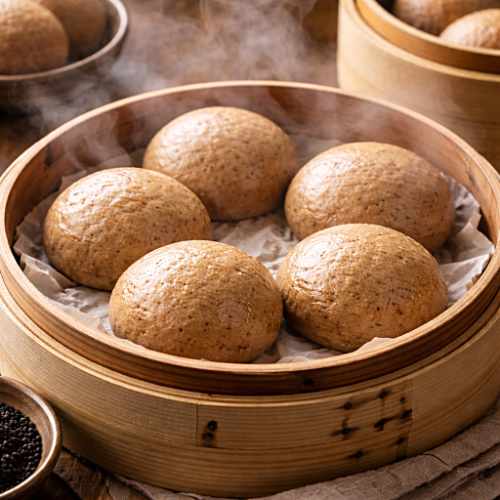
This recipe reflects that tradition while allowing for modern kitchens and ingredient availability.
Ingredients: Makes 8 small mantou
- 2 cups whole-wheat flour
(freshly ground wheat is ideal, but a high-quality packaged whole-wheat flour works well) - 1 teaspoon active dry yeast
- ¾ cup warm water
- 1 tablespoon honey, date paste, or allulose (optional)
- 1 tablespoon neutral oil
- Pinch of salt
Method:
Dissolve the yeast in warm water and let it sit for 5–10 minutes until lightly foamy.
In a mixing bowl, combine the flour and salt. Add the yeast mixture, oil, and sweetener if using. Mix until a soft dough forms, then knead gently for about 8–10 minutes, until smooth and elastic. Whole-grain dough will remain slightly firmer than white flour dough.
Cover and let the dough rise in a warm place until doubled in size, about 1 hour.
Punch down the dough and divide into equal portions. Shape each piece into a smooth round or oval. Place the mantou on small squares of parchment or cabbage leaves to prevent sticking.
Arrange in a steamer with space between each bun. Let them rest for 10–15 minutes before steaming.
Steam over boiling water for 15–18 minutes. Turn off the heat and allow the buns to rest in the steamer for 5 minutes before removing, which helps prevent collapse.
Serve warm.
Notes on Use and Variation:
Whole-grain mantou are satisfying without being heavy and pair well with both savory dishes and lightly sweet accompaniments. When made with freshly ground wheat, the flavor is noticeably fuller and more nutritious, but the recipe remains forgiving when using packaged flour.
Steaming rather than baking produces a moist, neutral bread that highlights grain quality rather than sweetness. For photography, mantou benefit from a simple, honest presentation: natural light, a bamboo steamer or cloth-lined basket, and visible texture on the cut surface.