

Scallion Oil Noodles
Cōng Yóu Bàn Miàn (葱油拌面)
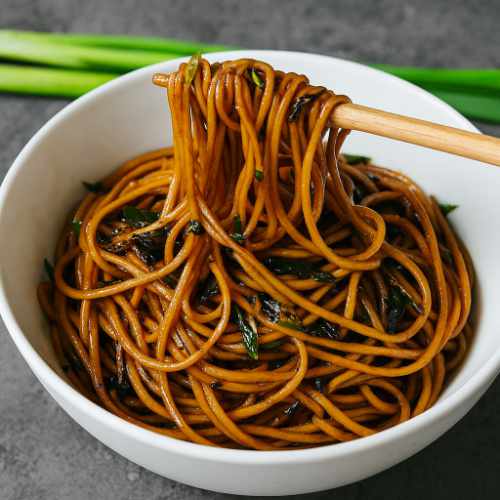 Scallion oil noodles are a quiet classic of Shanghai and the lower Yangtze region, where refinement often comes from restraint rather than abundance. At its heart, this dish demonstrates a foundational Chinese cooking principle: patiently coaxing fragrance from simple ingredients. By slowly infusing scallions into oil, their sharpness softens into sweetness, creating a rich, aromatic base that transforms plain noodles into a deeply satisfying meal. Traditionally eaten at home, it’s comfort food in the truest sense—humble, nourishing, and attentive to technique.
Ingredients: (Serves 2)
- 8 oz dried wheat noodles (Chinese wheat noodles or spaghetti)
- ½ cup neutral oil (avocado, peanut, or grapeseed)
- 6–8 scallions, sliced (separate white/green parts)
- 2 tbsp light soy sauce
- 1 tsp dark soy sauce (optional, for color and depth)
- ½–1 tsp sugar
Instructions:
In a small saucepan or skillet, add oil and scallion whites over medium-low heat. Cook slowly, stirring occasionally, until the scallions soften and turn golden. Add the green parts and continue cooking until lightly crisp and aromatic. Take care not to burn them; the oil should smell sweet, not sharp. Remove from heat and set aside.
Cook noodles according to package instructions. Drain well and return to the pot while still hot.
Add 2–3 tablespoons of scallion oil (with scallions), soy sauce, dark soy if using, and sugar. Toss thoroughly until the noodles are evenly coated. Adjust seasoning to taste and serve immediately.
Substitutions and Variations:
If dark soy sauce is unavailable, simply omit it; the flavor remains intact, though the color will be lighter. A small splash of tamari with a pinch of molasses can approximate its depth.
For added texture, lightly sautéed mushrooms or tofu strips may be folded in, though the dish is traditionally unadorned. Those sensitive to oil can reduce the amount used and rely more on thorough tossing to distribute flavor.
Health and Culinary Notes:
From a traditional Chinese viewpoint, scallions gently support circulation and digestion, while warm oil-based dishes can be grounding when eaten in moderation. This noodle dish is best enjoyed as a simple main or paired with leafy greens or a light soup to maintain balance.