
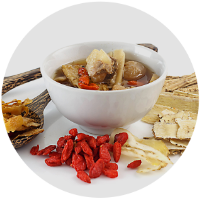


Fermented Black Beans
(Home-Style Use)
(Dòuchǐ 豆豉)
Fermented black beans occupy a unique place in Chinese cooking. They are rarely eaten on their own and almost never in large amounts. Instead, they are used deliberately, a pinch at a time, to add depth, aroma, and resonance to otherwise simple foods. In this way, they represent a mature understanding of fermentation: transformation used with restraint.
Traditionally prepared from black soybeans and salt, fermented black beans were valued for their keeping qualities and their ability to enliven everyday meals. In home kitchens, they were rinsed, crushed, or gently warmed before use, not treated as a garnish or centerpiece. Their purpose was to support other ingredients, not compete with them.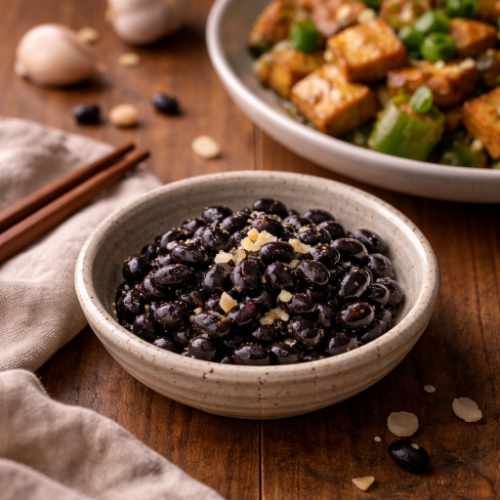
This approach is reflected here, focusing on how fermented black beans are handled rather than how they are manufactured.
Ingredients: Serves 4 as a flavoring
- 2 tablespoons fermented black beans (dòuchǐ)
- Warm water, for rinsing
- Optional: a small amount of neutral oil
Method:
Place the fermented black beans in a small bowl and rinse briefly under warm water to remove excess salt. Drain well.
Lightly crush the beans with the back of a spoon to release their aroma. At this point, they may be used directly, or gently warmed in a small pan with a few drops of oil over low heat for 1–2 minutes.
Use sparingly as a seasoning for vegetables, grains, tofu, or simple dishes. A little goes a long way.
Notes on Use and Variation:
Fermented black beans are meant to support a dish, not define it. Crushing them softens their sharpness and helps them integrate more evenly.
They are often combined with ginger, scallion, or garlic in cooking, but even alone they add depth when used carefully. Because of their salt content, they replace rather than supplement added salt.
Visually, fermented black beans are best shown in context: a small dish beside a larger plate, or lightly mashed and ready for use. This reinforces their traditional role as a background ingredient rather than a featured food.