Eight-Treasure Sweet Congee
(Bābǎo Zhōu 八宝粥)
In traditional Chinese households, desserts were rarely conceived as indulgences. Sweet dishes were often extensions of everyday nourishment, prepared warm, eaten slowly, and valued as much for balance as for pleasure. Eight-Treasure Sweet Congee is one of the best-known examples of this approach. Historically associated with festivals, family gatherings, and recovery after illness, it reflects a worldview in which grains, beans, seeds, and fruits work together to support the body rather than overwhelm it.
The “eight treasures” were never fixed. They varied by region, season, and household, depending on what was available and appropriate. What mattered was not the number, but the principle: combining whole foods of different textures and qualities into a gentle, sustaining dish. Sweetness came naturally from dried fruits and grains, not from heavy sugars, and the congee was always served warm.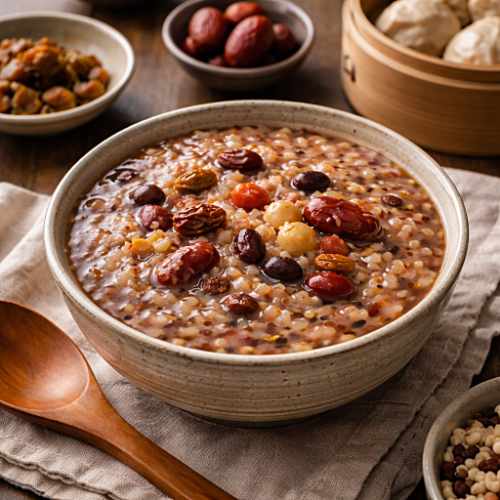
This version stays close to that spirit while remaining practical for a modern Western kitchen.
Ingredients: Serves 4
- ½ cup short-grain rice (or a mix of rice and barley)
- ¼ cup cooked red beans or adzuki beans
- 2 tablespoons dried lotus seeds or chopped dates
- 2 tablespoons raisins or dried longan (or substitute dates)
- 1 tablespoon goji berries
- 1 tablespoon black or white sesame seeds
- 6–7 cups water
- Sweetener to taste (honey, dates, or a small amount of allulose), optional
Method:
Rinse the rice thoroughly until the water runs mostly clear. If using dried lotus seeds, soak them in advance until softened.
Combine the rice, beans, dried fruits, seeds, and water in a pot. Bring to a gentle boil, then reduce to a low simmer. Cook uncovered, stirring occasionally, for 45–60 minutes, until the grains break down and the mixture becomes thick and creamy.
Adjust the consistency with additional hot water if needed. Sweeten lightly, only after the congee has fully cooked, tasting as you go. The final flavor should be softly sweet, not dessert-like in the Western sense.
Serve warm.
Notes on Use and Variation:
This congee can be eaten as a light dessert, an afternoon snack, or even a gentle breakfast. Ingredients may be adjusted freely based on availability and season, which reflects how the dish has always been prepared. Texture matters more than precision.