Moringa Oleifera: The Nutrient-Rich
Tree with a Growing Reputation
Moringa oleifera has acquired an impressive collection of names, including the drumstick tree, horseradish tree, and sometimes the “miracle tree.” Native to the Indian subcontinent, this fast-growing tree is now cultivated throughout tropical and subtropical regions for food, traditional medicine, animal feed, and even water purification. Its increasing popularity as a health food, however, comes primarily from its remarkably nutritious leaves.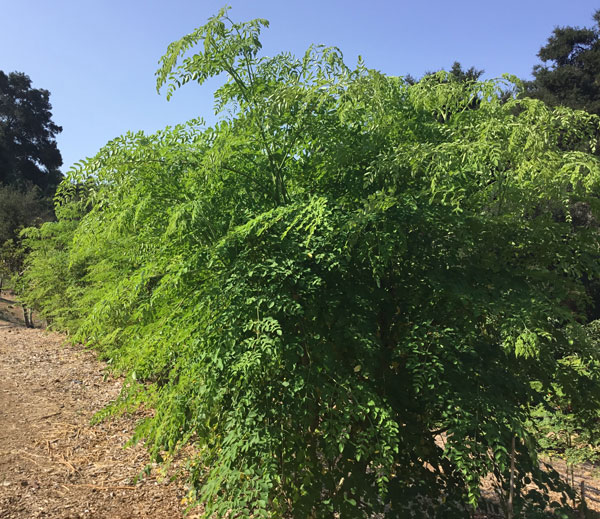
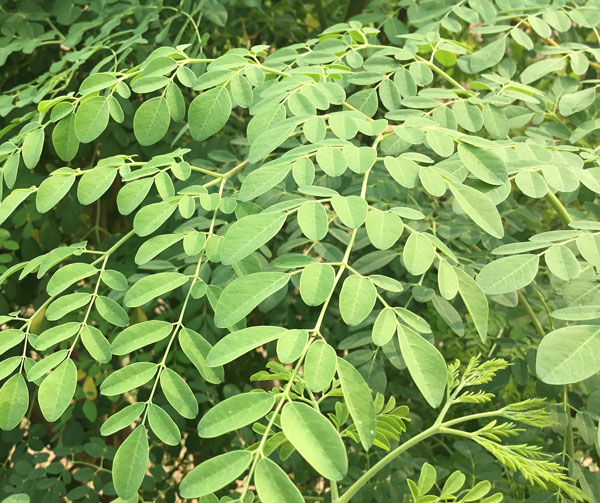
Fresh moringa leaves can be eaten much like other leafy vegetables, while dried leaves are commonly ground into the green powder now sold in health-food stores. The leaves contain protein, fiber, carotenoids, minerals, and several vitamins, along with plant compounds including flavonoids, phenolic acids, glucosinolates, and isothiocyanates. This combination has attracted considerable scientific interest in moringa as both a nutrient-rich food and a potential source of biologically active compounds.
Among its best-studied properties is antioxidant activity. Moringa leaves contain compounds that can help neutralize reactive molecules associated with oxidative stress. Laboratory and animal research has also suggested anti-inflammatory effects, although claims that moringa can prevent or treat specific diseases often extend well beyond what has been demonstrated in people.
Blood sugar regulation is another area receiving attention. Several small human studies have reported reductions in fasting or post-meal blood glucose after consuming moringa leaf powder. Other studies have suggested possible improvements in cholesterol and triglyceride levels. These findings are encouraging, particularly for research into metabolic health, but the clinical evidence remains limited. Studies have generally involved small numbers of participants, different doses, and relatively short treatment periods. Moringa should therefore not be regarded as a substitute for diabetes, cholesterol, or blood-pressure medication.
Its nutritional value may prove more important than any pharmaceutical effect. A systematic review of moringa supplementation found some evidence that larger amounts of leaf powder could improve hemoglobin or vitamin A status in nutritionally vulnerable populations. Researchers nevertheless concluded that better-quality human trials are still needed.
Moringa also has an interesting connection with China. Known as làmù 辣木, it is not an ancient Chinese medicinal plant. It originated in India and was introduced into China, where it is now grown particularly in the warmer regions of Yunnan, Guangdong, and Taiwan. In Yunnan it has become both an agricultural crop and a food. Ethnobotanical research in Xishuangbanna, for example, records moringa flowers being stir-fried, boiled, or added to soup. China has also established agricultural standards for commercial moringa cultivation and leaf-powder production.
That distinction is useful. Moringa does not need to be presented as an ancient Chinese remedy to be relevant to a Chinese health perspective. Its modern use illustrates something more familiar: food and medicine occupying overlapping territory.
For most people, moringa leaves are probably best viewed in exactly that way, as a nutritious vegetable or food ingredient rather than a miracle treatment. The scientific evidence supports genuine nutritional value and intriguing biological activity, but many of the dramatic health claims found online remain ahead of the research. As with many traditional plants, its greatest virtue is a highly nutritious food that can make a useful contribution to a varied diet.
USA grown moringa products available at: www.qi-journal.com/moringa