

Astragalus: The Tonic
Root in the Soup Pot
Astragalus is one of the best-known tonic herbs in traditional Chinese medicine. Known as huángqí 黃芪, the dried root has been used in China for more than two thousand years and appears in countless herbal formulas. Yet astragalus also has a quieter culinary role. Slices of the root are traditionally simmered in soups and broths, where they contribute their constituents to the liquid before the tough, woody pieces are usually removed.
That makes astragalus an interesting addition to a "Food as Medicine" series, although it sits closer to the medicinal end of the spectrum than ginger, jujube, or Chinese yam.
The medicinal material comes primarily from the roots of Astragalus membranaceus and closely related varieties. Traditional Chinese medicine regards huángqí as an important qì-tonifying herb. It is commonly associated with strengthening the body's resistance, supporting the spleen and lungs, and helping people who are weak, fatigued, or recovering from illness. Historical references to astragalus extend back to the Shénnóng Běncǎo Jīng 神農本草經, one of China's earliest materia medica. Modern reviews likewise describe it as one of the most widely used Chinese tonic herbs.
Modern research has identified hundreds of compounds in astragalus root. The groups receiving the most attention include polysaccharides, flavonoids, and triterpene saponins known as astragalosides. These compounds have demonstrated antioxidant, anti-inflammatory, metabolic, cardiovascular, and immune-related effects in laboratory and animal studies.
Immune function has received particular attention. Astragalus polysaccharides appear capable of influencing several aspects of immune signaling, and a systematic review of human studies reported changes in a number of cellular and inflammatory immune markers. That does not mean astragalus simply "boosts immunity," however. The immune system is highly complex, and altering an immune marker is not the same as demonstrating protection from infection or disease.
Researchers have also investigated astragalus in relation to blood sugar regulation, cardiovascular disease, fatigue, kidney disease, and cancer supportive care. Some human trials have produced encouraging results. For example, a small randomized trial involving people with post-stroke fatigue reported improvement in fatigue and several quality-of-life measures after astragalus treatment. But much of the broader evidence still comes from animal studies, laboratory experiments, or Chinese herbal formulas containing multiple ingredients, making it difficult to attribute an effect specifically to astragalus.
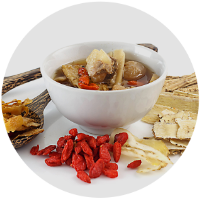
This is where its culinary use provides a more modest perspective. Astragalus root is sometimes combined with chicken, mushrooms, jujube, goji berries, or other ingredients in long-simmered Chinese soups. Unlike carrots or potatoes, the fibrous root itself is generally not eaten. It functions more like a traditional stock ingredient, simmered to extract flavor and soluble compounds and then removed before serving.
Astragalus therefore differs from most of the foods in this series. Its nutritional value is not the main reason it is consumed. Instead, it represents an older tradition in which medicinal plants could also become part of the kitchen, particularly in foods prepared for nourishment, recovery, or seasonal health.
Modern science has found enough biological activity in astragalus to make that long reputation interesting, but not enough to justify many of the sweeping claims sometimes made for it. Even recent research reviews emphasize that many proposed effects still depend heavily on cell and animal studies and require stronger clinical validation.
Astragalus belongs in the "Food as Medicine" tradition not because it is an ordinary food, but because it shows how easily food and herbal medicine can overlap. A root may begin in the herbal pharmacy, spend several hours in a soup pot, and ultimately become part of a meal. In Chinese dietary culture, those boundaries have never been especially rigid.