Western Medicine Looks at Illness...
TCM Looks at Health
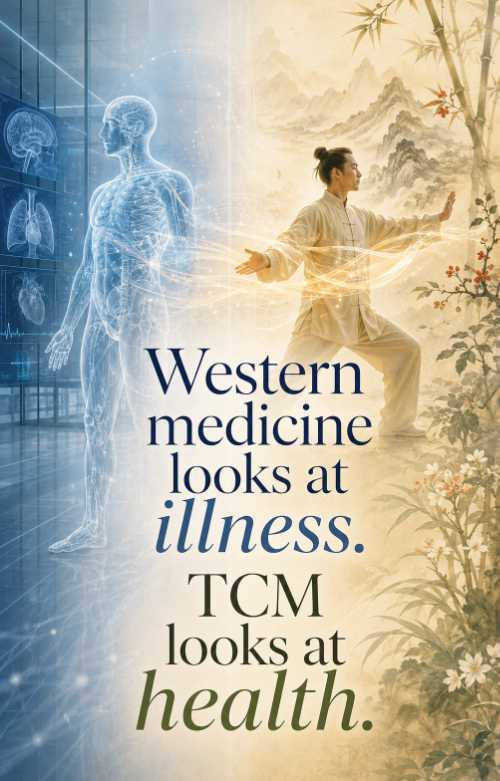 “Western medicine looks at illness. Traditional Chinese medicine looks at health.” It is a memorable quotation, and like most memorable quotations, it contains both insight and oversimplification.
Western medicine does not ignore health, and traditional Chinese medicine does not ignore illness. Both systems seek to relieve suffering, prevent disease, and help people live longer and better. Yet they often begin from different questions. Those differences can explain why many people find the two approaches complementary.
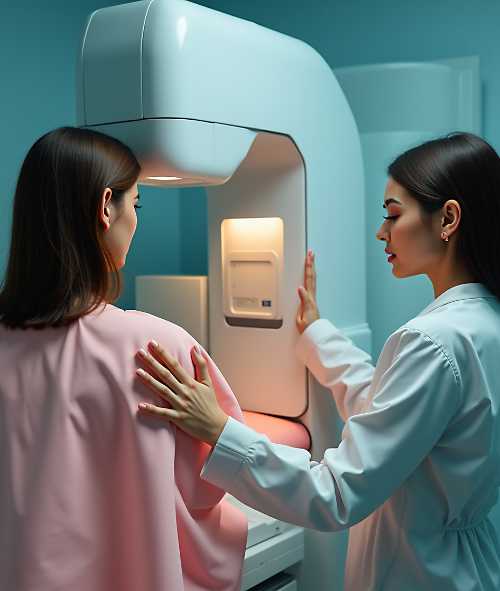
Modern Western medicine became increasingly effective as physicians learned to identify specific causes and mechanisms of disease. Laboratory testing, medical imaging, pathology, and microbiology made it possible to see what was happening inside the body with remarkable precision. If an artery is blocked, a bone is fractured, or a harmful bacterium is present, the problem can often be identified and treated directly.
This approach is especially powerful in emergencies, infections, surgery, and the management of clearly defined diseases. It has saved countless lives. Its strength lies in finding what is wrong and determining what can be done about it.
Traditional Chinese medicine developed from a different intellectual and historical setting. Without modern laboratories or imaging equipment, Chinese physicians learned to observe patterns. They considered not only the patient’s primary complaint, but also digestion, sleep, appetite, energy, emotional state, temperature preferences, complexion, pulse, tongue, and other signs.
The goal was not simply to name a disease. It was to understand how the person’s overall condition had become unbalanced.
In Chinese medicine, two people with the same Western diagnosis may present different patterns and therefore receive different treatments. Conversely, two apparently unrelated illnesses may be treated similarly if they arise from the same underlying pattern. This is summarized by the traditional principles of “different treatments for the same disease” and “the same treatment for different diseases.”
This may be what the quotation means by “looking at health.” TCM asks how well the whole person is functioning. Is sleep restorative? Is digestion comfortable? Does energy remain reasonably steady? Does the person adapt well to seasonal, emotional, and physical changes? Health is understood less as a fixed state and more as an ongoing ability to maintain balance.
The traditional Chinese concept of yǎngshēng (养生), commonly translated as “nourishing life,” extends this attention beyond the clinic. Food, movement, breathing, rest, emotional moderation, and seasonal adaptation are all considered part of maintaining health. One does not have to wait until a disease has been diagnosed before paying attention to the body.
There are limitations on both sides. Western medicine can sometimes become so focused on test results or individual organs that the person’s daily experience receives too little attention. Traditional Chinese theories, meanwhile, should not be treated as substitutes for modern diagnostic testing, emergency care, or treatments supported by strong scientific evidence. A pleasing theory is not automatically an accurate biological explanation.
The most useful approach may be to avoid forcing a choice between them. Western medicine can identify disease, assess risk, and provide treatments that would have been unimaginable to earlier physicians. TCM and yangsheng can encourage us to notice patterns in daily life, support healthy habits, and participate more actively in our own well-being.
Perhaps the quotation is best understood not as a contest, but as a reminder. Treating illness matters. So does cultivating the conditions in which health can continue.